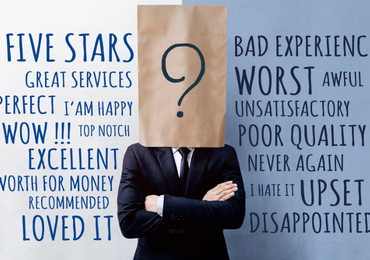

“Delight customers” has become one of the most overused and misunderstood phrases in modern customer experience strategy. For years, organizations have poured time, money, and creativity into crafting moments of surprise and delight, believing these peaks would drive loyalty. But the data tells a different story. More often than not, customers don’t leave because you failed to impress them; they leave because you frustrated them.
This shift in perspective is subtle, but profound. It reframes customer experience from a pursuit of emotional highs to a disciplined elimination of emotional friction.
If you analyze large volumes of customer feedback across industries, a consistent pattern emerges: complaints cluster around the same themes, delays, poor communication, lack of transparency, and unmet expectations. Rarely do customers demand to be “wowed.” Instead, they want things to work. Smoothly. Predictably. Effortlessly.
The irony? Many organizations respond to declining satisfaction by layering on more: more features, more touchpoints, more campaigns designed to “delight.” However, each addition increases complexity, and with complexity comes increased opportunities for failure.
In reality, the path to better customer experience is subtraction, not addition.
Consider this: a customer who receives exactly what they expected, without friction, is far more likely to return than one who experiences a flashy but inconsistent journey. Emotional peaks are memorable, yes, but so are frustrations. And frustrations tend to linger longer.
Annoyance is rarely dramatic. It’s not a catastrophic failure; it’s the accumulation of small, repeated irritations. A delayed response. A confusing interface. A policy that feels arbitrary. Individually, these moments seem insignificant. Collectively, they erode trust.
What makes annoyance particularly dangerous is that it often goes unnoticed internally. Traditional metrics such as CSAT, NPS, and even structured surveys tend to smooth over these micro-frictions. They capture outcomes, not the lived experience.
Once you dig into unstructured feedback, customer comments, support transcripts, and social media conversations, you see the texture of annoyance. The language becomes more telling: “I had to follow up twice,” “No one explained this,” “It shouldn’t be this hard.”
These are not requests for delight. They are signals of friction.
Research consistently shows that reducing customer effort has a stronger impact on loyalty than creating moments of delight. Customers value ease over excitement. They remember how hard or easy it was to get what they needed.
This is where many strategies go wrong. They optimize for standout moments instead of consistent experiences. They celebrate the exceptional while tolerating the inefficient.
But customers don’t experience your brand in isolated moments. They experience it as a journey. And in that journey, consistency beats brilliance every time.
Understanding where and why customers feel annoyed requires more than intuition. It requires the ability to process and interpret feedback at scale, across channels, touchpoints, and time.
When you analyze large volumes of qualitative data, patterns emerge that would otherwise remain hidden. You begin to see not just what customers are saying, but what they mean. You can identify recurring pain points, quantify their impact, and prioritize fixes based on real-world evidence.
More importantly, you shift from being reactive to proactive. Instead of responding to complaints, you anticipate them. Instead of guessing what matters, you know.
This shift transforms customer experience from an art into a science, one grounded in evidence, not assumptions.
The brands that win are not the ones that try hardest to impress. They are the ones who remove obstacles with precision. They make interactions intuitive. They communicate clearly. They respect the customer’s time.
In other words, they don’t aim to delight customers; they aim not to annoy them.
And paradoxically, that’s what creates delight.
Because when something just works, when it feels easy, seamless, almost invisible, that’s when customers notice. Not in a loud, celebratory way, but in a quiet, enduring one. The kind that builds trust. The kind that drives loyalty.
It’s time to challenge the obsession with delight. Not because delight is unimportant, but because it is often misunderstood. True delight is not manufactured through grand gestures. It is earned through consistency, clarity, and care.
The opportunity, then, is not to do more, but to do better. To identify the friction points that matter most. To fix them relentlessly. To listen, continuously and at scale, to what customers are really saying.
Ultimately, the most powerful experience you can deliver is not one that surprises your customers.
It’s one that never frustrates them in the first place.