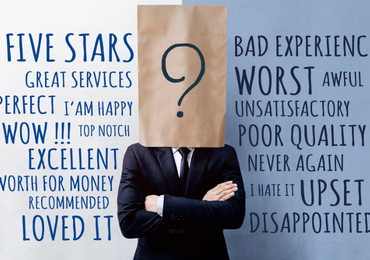

Every customer experience begins with a story that a company tells about its customers, but that story isn’t always the one customers are actually living. Ask a leadership team to describe the customer journey, and you’ll usually get a confident, well-rehearsed answer: onboarding is smooth, support is responsive, the product “just works.” The language is polished. It’s also, more often than not, wrong.
Here’s the test. Try to describe your customer’s experience using their exact words, the phrases they actually type into a support ticket, say during a call, or leave in a review, rather than the words your team uses in a strategy deck. If you can’t do it, you don’t truly understand your customer experience. You have a hypothesis about one.
Most organizations don’t lack customer feedback. They lack an accurate translation of it. Feedback is collected, summarized, and compiled into a dashboard, and by the time it reaches a decision-maker, it has been filtered through survey design, categorized into pre-built tags, and refined into something presentable. Somewhere in that process, the customer’s actual voice, the frustration, the specific word they used, the moment that made them consider leaving, gets lost.
This isn’t a minor detail. Language is data.
There’s a reason companies default to their own language over the customer’s. Internal language is tidy. It fits into a quarterly report.
But the mess is the truth, and the tidy version is a story leadership tells itself to feel like progress is being made.
The gap between those two versions of events is where customer experience programs quietly fail. Teams optimize for the metric instead of the moment. They report improvement on paper, while customers continue leaving for reasons that no dashboard captured.
The challenge is not that organizations don’t care about their customers. The challenge is that internal processes often reshape customer reality into something easier to measure, report, and manage.
But what is easy to measure is not always what matters most.
The hard part isn’t wanting to hear customers in their own words. It’s doing it at scale.
One conversation is easy to remember. Ten thousand are not.
Feedback today doesn’t arrive through a single, tidy channel; it’s scattered across support tickets, reviews, social posts, chat logs, and casual comments to frontline staff who never file a report. Most of it never reaches anyone with the authority to act on it.
This is where customer experience leaders need more than good intentions. They need a way to actually capture what’s being said, everywhere it’s being said, without losing the texture of the original words in the process of making sense of it.
Not a system that reduces feedback to a score, but one that surfaces the actual language behind the score, so a leadership team can see the pattern in a thousand comments the same way they’d notice it in one honest conversation with a single customer.
Because that’s really what’s at stake.
The goal was never to collect feedback. It was to understand people well enough to act before they leave, and to design experiences around what they actually said, not what was convenient to hear.
The next time your team reviews customer experience, don’t ask for the score.
Ask for the sentence.
Ask someone to read out, verbatim, what five customers said this week, in their own words, unedited.
If that’s uncomfortable, or if no one can produce it quickly, that discomfort is the most useful piece of data your organization will get all quarter.
Understanding your customer was never about having a dashboard that looks complete. It’s about being able to speak their language back to them, accurately, specifically, and often enough that it changes what you build next.
Because the organizations that truly understand customer experience are not the ones collecting the most feedback. They are the ones listening closely enough to recognize the truth inside it.