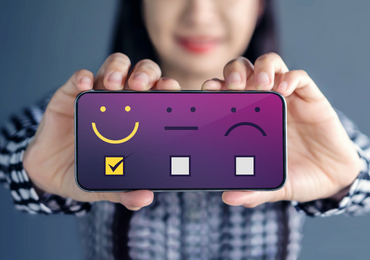

Employee experience is often reduced to a single engagement score. Yet a positive survey result doesn’t necessarily mean employees feel heard, supported, or motivated to stay. Many organizations with favorable survey results continue to struggle with burnout, voluntary turnover, declining innovation, and quiet quitting. This disconnect raises an important leadership question: Can a company have satisfied employees without having a healthy employee experience? The answer is yes. Employee surveys remain one of the most valuable tools available to leaders, providing structured insight into workforce sentiment. However, they capture only a moment in time. A favorable score does not necessarily reveal how employees feel during difficult projects, how supported they are by their managers, or whether they believe speaking honestly is safe. Numbers are useful indicators, but they rarely tell the whole story.
Employee feedback is shaped by more than workplace reality. It is also influenced by human psychology. Some employees experience survey fatigue and respond quickly without much reflection. Others question whether their responses are truly anonymous, especially in smaller teams. Some have simply lowered their expectations, believing that “things could be worse,” while others avoid criticism because they doubt meaningful change will follow. Social desirability bias can also play a role, encouraging employees to provide answers they believe leadership wants to hear rather than expressing genuine concerns. This is why high engagement scores should never be interpreted as definitive proof of a healthy employee experience. Gallup emphasizes that engagement measurement is only valuable when it leads to ongoing conversations and meaningful action, not when it becomes a scorecard for success. Organizations that focus exclusively on favorable percentages risk creating blind spots that hide emerging workplace issues.
Employee experience unfolds every day, not just during an annual or quarterly survey. A single questionnaire may overlook the daily frustrations that gradually erode motivation: an overloaded manager, unclear priorities, inconsistent communication, stalled career development, or growing emotional exhaustion. Consider healthcare, where employee engagement surveys may report generally positive results while frontline staff continues to experience rising workloads and burnout. The survey reflects one point in time, but the day-to-day reality is far more dynamic. Similar patterns exist across retail, hospitality, and technology, where small operational frustrations accumulate long before they appear in formal reporting. Relationships also matter. Research consistently shows that managers have an outsized influence on employee engagement. Gallup estimates that managers account for approximately 70% of the variance in team engagement, underscoring that employee experience is shaped less by organizational slogans than by everyday leadership behaviors.
Effective organizations treat survey results as the beginning of a conversation, not the conclusion. Rather than asking whether engagement increased by three percentage points, leaders should examine trends, recurring themes, and the stories behind the numbers. Continuous listening through regular manager conversations, team discussions, exit interviews, and open feedback channels provides a richer understanding of the overall employee experience than a single annual measurement. McKinsey’s State of Organizations research highlights that organizations navigating rapid change successfully are rethinking leadership, workforce expectations, and organizational adaptability. Rather than relying on periodic measurement alone, resilient organizations continuously seek to understand employees’ evolving needs and translate those insights into meaningful organizational action. Equally important is psychological safety. Employees are far more likely to share concerns when they believe their perspectives will be respected rather than dismissed. Creating this environment requires visible leadership responsiveness. When employees see feedback translated into action, trust grows. When surveys disappear into reports with no follow-up, participation and honesty often decline. The objective is not collecting more feedback. It is developing better insight into the employee experience and responding consistently to what employees are experiencing.
The strongest leaders understand that employee experience is an ongoing leadership responsibility rather than an annual HR initiative. Deloitte’s Global Human Capital Trends research highlights that organizations are increasingly prioritizing adaptability, trust, and human-centered leadership as essential capabilities for navigating constant change. Rather than relying solely on periodic measurement, leading organizations are building cultures that continuously learn, respond, and evolve. Instead of asking only, “How satisfied are our employees?” they ask deeper questions:
They encourage honest dialogue, make it safe to challenge assumptions, communicate the actions taken after feedback, and revisit issues regularly rather than waiting for the next survey cycle. Organizations that consistently improve employee experience do not simply measure engagement, they demonstrate that listening leads to change.
High survey scores are encouraging, but they should never become the destination. Employee surveys remain an essential leadership tool, but they are only one piece of the puzzle. Lasting improvements in employee experience come from combining meaningful measurement with everyday conversations, visible leadership, and consistent action. The organizations that thrive are those that treat feedback as the beginning of continuous improvement rather than the end of a reporting cycle. The more meaningful questions are often the ones that cannot be summarized in a dashboard: What aren’t we hearing? Who isn’t speaking? What stories are hiding behind the numbers? The healthiest organizations are not necessarily those with the highest engagement scores. They are the ones that continuously listen, learn, and adapt, recognizing that employee experience is built through everyday leadership, not annual measurement.